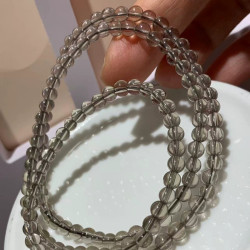
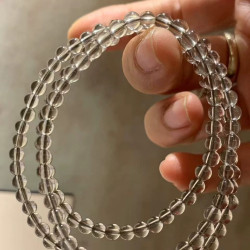
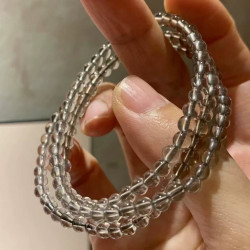
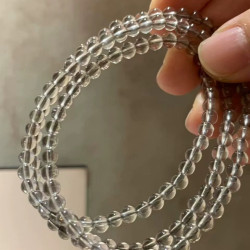
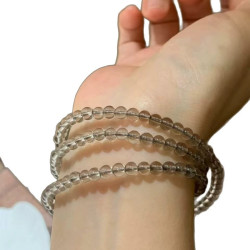
Smoky Quartz
Smoky quartz is clear quartz that turned brown in the earth — the color comes from natural radiation acting on trace aluminum, and no two stones hold the tone the same way. At Mohs 7 it is one of the most wearable stones in jewelry, and its warm brown reads vintage against gold and quiet against silver. Below you will find our smoky quartz range of bracelets and pendants.
What Smoky Quartz Actually Is
It is silicon dioxide — the same mineral as clear quartz and amethyst — with a color center formed when natural radiation from surrounding rock interacts with aluminum already present in the crystal lattice. The depth of brown depends on the radiation dose and the iron balance, ranging from a pale tea tint to nearly black "morion". Scottish material from the Cairngorm mountains was so prized that "cairngorm" became a trade name for the whole variety, set in Highland brooches and kilt pins through the Victorian era.
Important modern context: much smoky quartz on the market is irradiated deliberately — laboratory treatment of pale quartz to produce the same brown color center. The result is chemically identical to natural color, and the trade treats it as routine, but naturally colored stones with documented provenance carry the collector's premium.
Smoky Quartz Meaning and Association
In crystal tradition smoky quartz is the grounding member of the quartz family — the stone associated with steadiness, release of tension and clearing the mental fog a hard week leaves behind. It is most commonly linked to the root chakra. These are cultural associations rather than scientific claims, but they explain why smoky quartz is the stone kept on a desk rather than saved for evenings. To compare its clear sibling, see the clear quartz collection; to browse by purpose, start at the crystals by intention hub.
How to Wear and Use Smoky Quartz
The color does the styling: a single strand of smoky beads gives an outfit weight without brightness, and the stone layers well with silver, leather and bronze. Wear it as the daily piece it wants to be — smoky quartz takes wrist knocks without complaint. Faceted pendants show the color depth best under warm light, where the brown reveals its amber-like glow.
Caring for Smoky Quartz
Standard quartz care applies: warm water, mild soap, a soft brush, thorough drying. Ultrasonic cleaning is safe for untreated, fracture-free stones. The one caution is sustained strong light — the same color center that makes the brown can be slowly bleached by months of direct sunlight, so a smoky quartz left on a sunny windowsill will eventually grow paler. Store it in a box or drawer, keep it away from harder stones that will scratch it in shared storage, and the piece will outlast its owner's interest in it.
How to Tell Natural Color from Treated
Natural smoky quartz usually shows color zoning — darker toward the tips of the crystal or in bands, lighter elsewhere — because natural radiation reached the stone unevenly. Lab-irradiated stones tend toward uniform, sometimes overly dark brown with a greenish cast. Both are genuine quartz; the question is disclosure, and honest sellers state treatment. Any stone described as "smoky topaz" is mislabeled smoky quartz — topaz is a different mineral entirely, and the phrase survives purely as old marketing language.