The Pocket Companion: How to Choose and Care for an Everyday-Carry Crystal
By Starener Editorial - 08/08/2026 - 0 comments
Why a Pocket Stone Still Matters
Long before boarding passes existed, travelers carried stones. Roman soldiers wore carnelian; Norse sailors were said to navigate by a shimmering sunstone; pilgrims across cultures pocketed a small talisman before setting out. The habit survives because it answers something modern life still asks for: a small, familiar object that steadies the hand when the day feels unmoored.
In the four-layer understanding of crystal energy, a pocket companion works mostly through the psychological and symbolic layers. Tradition holds that each stone carries an archetypal meaning, and practitioners note that the tactile ritual itself — reaching into a pocket, closing a hand around something smooth and cool — gives restless attention a physical anchor, the same principle behind worry stones and prayer beads. Many people find the comfort real even while remaining clear-eyed about the metaphysics: a stone will not steer the plane or fix the meeting. It gives your nervous system something to hold.
Choosing Your Companion: Start With the Intention
The useful question is not "which crystal is best?" but "what do I want support with today?" When the intention is clear, the choice becomes simple. These are the stones most often carried, and why.
For protection and boundaries: black tourmaline
Black tourmaline is the default protective stone in modern practice, associated with feeling safe in unfamiliar surroundings and with deflecting the low-grade static of crowds, commutes and packed trains. If busy places drain you, this is the classic outside-pocket choice. It is also hard — 7 to 7.5 on the Mohs scale — so it shrugs off keys and pocket lint.
For calm: amethyst
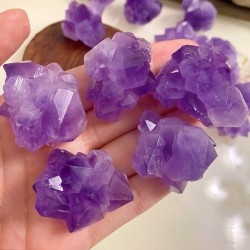
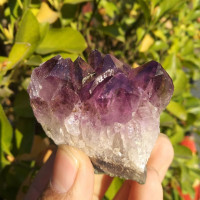
Amethyst is associated with settling a racing mind. Travelers hold it during takeoff; speakers hold it before walking on stage; many people set a small palm stone on a nightstand to make an unfamiliar bedroom feel less foreign. Its quartz structure is durable and takes beautifully to pendants and rings.
For transitions: moonstone
Moonstone has been called the traveler's stone for centuries, linked in tradition to safe passage, new beginnings and intuition on the road. It suits long journeys, jet lag and any chapter that is really a life change. Note that it is softer than quartz — a wrapped pendant or bracelet is safer than loose pocket carry.
For grounding: smoky quartz and hematite
Smoky quartz is the stone for the scattered, spacey, two-coffees state — traditionally held for a minute on arrival as a way of landing in a new place. Hematite is dense for its size, and many carriers say the weight itself becomes the cue: heavy in the pocket, steady in the head.
For change and solo adventures: labradorite
Labradorite is associated with thresholds — keeping your own energy intact while everything around you shifts. Practitioners often recommend it for relocation, big trips and first-time destinations.
For minimalists: clear quartz
If you would rather pack one stone, clear quartz is the traditional all-rounder, believed to amplify whatever intention you set and to stand in for other stones.
Durability and Care: The Practical Layer
A pocket stone lives a rough life. A few practical rules keep it — and you — happy:
- Choose tumbled over pointed. Tumbled stones survive bags and pockets; delicate points chip and can tear a bag lining.
- Use a soft pouch. A small drawstring pouch stops stones scratching each other and keeps softer stones like moonstone or howlite from marking.
- Keep it in hand luggage. The whole point is having it with you; checked bags go missing.
- Cleanse between chapters. After a big trip or a hard week, many practitioners reset a stone with moonlight, sound or a brief smoke pass — whichever method suits the stone's hardness. A reset, like washing a favorite mug, marks the closing of one chapter and the opening of the next.
A Simple Carry Ritual
The ritual layer is where a pocket stone stops being a souvenir and becomes a practice. Try this for a week:
Each morning, hold the stone for three breaths and name one intention for the day — patience for the commute, focus for the pitch, calm for the flight. Each evening, hold it again and let the day go. That is the entire ritual: two moments, six breaths. What it builds is a pavlovian bridge between the object and the state you want to access, so that mid-day, one touch of the pocket is enough to remember who you decided to be.
If you would rather wear your companion than pocket it, the zodiac-aligned crystal pendants at Starener are made for exactly this kind of everyday, intention-first carrying.
FAQ
Which crystal should I carry every day?
Start with your dominant need: black tourmaline for protection in crowded places, amethyst for calm, smoky quartz or hematite for grounding, moonstone for transitions. One protective and one calming stone together cover most situations.
Can I take crystals on a plane?
Yes — crystals are generally fine as personal items in hand luggage. Check your airline and security guidance for unusually large pieces, and wrap softer stones to prevent scratches.
How do I cleanse a pocket stone?
Match the method to the stone: moonlight and sound suit nearly everything; dry methods suit water-sensitive stones like selenite and raw malachite. Many people cleanse after emotionally heavy periods or big trips.
Does the stone need to touch my skin to work?
In the tradition's terms, touch strengthens the ritual connection, but a stone in a pocket or bag still serves as a tactile and symbolic anchor. Practitioners agree the intention you attach to it matters more than the contact.
Tags: pocket crystal, everyday carry, crystal companion, travel stones
Related Pieces
View All →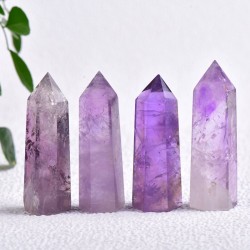
You May Also Like
All Articles →
This content is copyrighted by its original authors. In case of any infringement, please contact us for removal.
Comments
Write a comment