Your Inner Weather Forecast: Reading Planetary Transits as Emotional Cycles This October
By Starener Editorial - 09/08/2026 - 0 comments
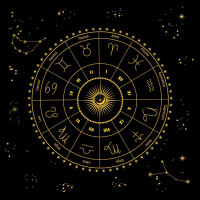
Check the sky before you check your mood. That is the quiet invitation at the heart of psychological astrology, a growth-centered way of reading the birth chart as a map of the mind rather than a script of fate. In this framework, the moving planets — the transits — are not orders arriving from above. Many practitioners describe them as an inner weather forecast: useful, checkable, and never an instruction to feel a certain way.
Why astrologers talk about weather, not destiny
A weather report does not tell you what kind of day you must have. It tells you what to pack. Transits work the same way in the psychological tradition. When a planet in the sky forms a relationship to a sensitive point in your natal chart, practitioners say a theme gets highlighted — identity, connection, work, rest, or the deeper story you are living out. The forecast offers orientation, not command.
The forecast tells you what to pack, not what to feel
This distinction matters for self-awareness. If you know a period of release is approaching, you may find it easier to set something down instead of forcing it to continue. If a cycle of restructuring is ahead, you can plan for change instead of being ambushed by it. Tradition holds that awareness creates choice; the planets do not remove it.
The Moon sets the daily emotional climate
Practitioners often describe the Moon as the most immediate influence on emotional tone, shifting the inner weather every two to three days. Lunar transits are said to color sensitivity, rest needs, and instinctive reactions. When an emotional wave feels sudden or hard to explain, many people find it helpful to ask a simple question first: where is the Moon today? Even if you conclude the answer is coincidence, the act of asking separates a passing mood from a deeper pattern — and passing moods are easier to be gentle with.
Slower planets shape the season you are in
Beyond the Moon, the slower movers describe longer seasons. Each carries a different emotional assignment, according to the tradition.
Saturn: the sustainability audit
Saturn transits are often described as audits. Emotional patterns get tested for durability; coping habits that once worked may quietly stop working. These periods can feel heavy, but many practitioners say they ultimately support resilience and self-trust, because what survives the audit is genuinely yours.
Mars: the surge you can steer
Mars transits tend to raise the temperature — irritability, urgency, the urge to push. Read as information rather than malfunction, that surge can be steered into honest conversations, hard workouts, or finished projects instead of snapped words.
Jupiter and Venus: the widening and the warming
Jupiter transits are said to expand emotional capacity, sometimes to the point of excess; Venus transits tune your sense of worth and connection. Neither is inherently "good" or "bad." They are simply different weather systems moving through a chart.
From "What is wrong with me?" to "What is being activated?"
Perhaps the most practical gift of transit work is the swap of one question for another. Instead of asking what is wrong with you on a difficult afternoon, the psychological astrologer asks: what is being activated right now? The reframing normalizes emotional shifts. Emotions are rhythmic, tradition holds, not static — and rhythm is not a malfunction.
Heightened states, in this reading, often mean the psyche is integrating something new. That does not make hard days easy, but it makes them legible. Legibility reduces resistance, and reduced resistance is half of calm.
A five-minute transit journaling practice
- Check the Moon's sign today and write one sentence about the emotional tone you noticed.
- Name one theme that keeps surfacing this month — a relationship, a boundary, a decision.
- Ask the orientation questions: What feels ready to be released? Where am I being asked to take clearer responsibility for my well-being?
- Note one small response — more rest, a conversation, an honest no — and treat it as dressing for the weather, not fighting it.
Some people like a physical anchor for this practice. A piece of chart-inspired jewelry, worn daily, can serve as a tactile cue that today's weather is information, not identity — you can explore the zodiac pieces at Starener if you want a reminder you can actually touch.
FAQ
Do transits predict specific events?
Practitioners generally say no. Transits highlight timing and themes — the questions life is asking — while events remain shaped by your choices and circumstances. The tradition treats them as orientation, not prediction.
How long does a transit last?
The Moon moves through a sign in about two and a half days; Mercury and Venus take weeks; Saturn and the outer planets can stay active on a natal point for months or even years, often revisiting a theme several times.
Do I need my whole birth chart to start?
No. A birth date is enough to follow the Moon, and adding your Sun and Rising signs gives you most of the daily weather picture. Deeper work can come later.
Can challenging transits actually be good?
Many practitioners say the tense ones are growth catalysts — Saturn builds structure, Uranus shakes loose what is stale, and pressure is often where evolution happens. Supportive and challenging cycles are considered equally necessary.
Tags: inner weather forecast, planetary transits, emotional cycles, psychological astrology, birth chart awareness
Related Pieces
View All →



You May Also Like
All Articles →

This content is copyrighted by its original authors. In case of any infringement, please contact us for removal.
Comments
Write a comment