The Asteroid I Kept Skipping: Three Months of Sitting With Chiron in My Chart
By Starener Editorial - 03/10/2026 - 0 comments
Last month, on an ordinary Tuesday evening, a friend who reads charts looked over my printed natal wheel, tapped one small symbol near the bottom, and asked, "Which placement do you never look at?" I laughed before I could stop myself. "Chiron," I said. "Always Chiron." I have studied my chart for years — my Moon, my Saturn return, my crowded third house — and I still skim past that one little key, the way you skim past a drawer you keep meaning to sort. She smiled. "That's the one to start with."
I want to write down what happened in the three months after that conversation, because it quietly rearranged how I think about the harder rooms in my own head.
The drawer I kept meaning to sort
Here is what I did first, and why it didn't work: I googled my Chiron placement, read that it represents "the wound that becomes the gift," and closed the tab feeling nothing. The phrase was true and useless at the same time, like reading the back of a medicine bottle when what you have is a splinter. For two weeks nothing changed. What finally moved me was getting curious about why I kept skipping it. Avoidance is information. The placement I never look at is usually the one that knows me best.
What Chiron actually is: the map I resisted
Once I stopped flinching, I sat down and drew myself a proper map. Chiron is a small body discovered in 1977, orbiting between Saturn and Uranus — between the old teacher of limits and the newer teacher of awakening, as astrologers like to put it. It takes roughly fifty years to circle the Sun, so it spends years in each sign, and around age fifty it returns to where it started in your chart. That's the famous Chiron return, which many people describe as a reckoning with the one thing they've been managing their whole life.
In psychological astrology — the reading of the chart as a mind map rather than a fixed fate — Chiron marks where you feel fundamentally, privately unfinished. Not cursed. Unfinished. The Greek myth behind it is blunt: Chiron was an immortal centaur, wise and kind, wounded accidentally by a poisoned arrow. He could not die and could not heal. His wound never closed, and he became the greatest healer and teacher of his age anyway — not despite the ache, but through his long, unglamorous apprenticeship with it.
Three dials, not one verdict
What made the map usable for me was splitting it into three dials. The sign describes the style of the wound — Chiron in Aries circles identity and the right to exist as you are; in Cancer, belonging and being nurtured; in Capricorn, legitimacy and the right to take up space. The house tells you the room where the ache does its daily work — the fourth, home and family; the seventh, partnership; the tenth, career and being seen. The aspects to other planets describe how the wound wires into the rest of the psyche — Chiron-Moon ties it to nurture, Chiron-Mercury to being heard, Chiron-Venus to feeling worthy of love.
Teachers of this tradition also describe two classic escape routes: avoidance ("I won't go near that area of life") and overcompensation ("I'll become the absolute best at the thing that hurts"). Neither heals. One leaves the wound untended; the other uses it as fuel while the ache underneath stays untouched. Reading that, I recognized myself so precisely it was almost rude.
The small practices I actually did
One honest sentence
First, I wrote a single sentence at the top of a page: "The thing I keep explaining away is ______." No analysis. The first version was diplomatic. The third version, a week later, was true. That sentence became my anchor for everything else.
The two-column ledger
Second, I kept a two-column note for a month: where I overcompensate and where I avoid. Every time I noticed myself either performing extra hard or going quiet, one line went in a column. By week three the pattern was embarrassingly visible — and seeing it on paper loosened its grip more than any affirmation ever had.
The monthly question
Third, on the first of each month I sit with one question instead of a fix: "What has this taught me that I could not have learned any other way?" Some months the honest answer is "nothing yet, I'm still sore." That counts. The question is not a technique; it's a re-aiming of attention.
The flinch as a compass
Fourth, I started treating my own flinch as data. When someone else struggles in the exact area of my Chiron and my chest tightens with an old recognition, that sting is the teacher signal — the myth's quiet promise that the wound, consciously carried, turns into the capacity to sit with someone else's version of it without flinching back.
I wore the same thin pendant through all three months, a small pointed stone I picked from Starener during that period — not as a talisman with opinions, but as a physical bookmark for the practice. My hand found it on hard days, and that was enough.
What changed, and what didn't
Three months in, the wound has not closed. I don't expect it to; in this tradition that was never the assignment. What changed is the relationship. I stop mid-overcompensation now, sometimes. I notice the drawer without opening it at 2 a.m. My friend's tap on that little symbol did what the best astrology does — it didn't tell me who I am. It pointed at the room I'd furnished in the dark and handed me a lamp.
Questions people actually ask me about Chiron
Do I have to believe in astrology for this to work?
I don't think belief is the entry fee. I treat Chiron as a mirror with good lighting — a structured way to look at what I'd rather not. If the story of a wounded teacher does nothing for you, the two-column ledger still works as plain self-observation. In my experience the practice matters more than the cosmology.
What if my Chiron placement doesn't sound like me at all?
Mine didn't either, at first. Read the house before the sign, and read both loosely. Then watch your own behavior for a month — the ledger will tell you more than any description. If nothing lands after an honest season, let it go. Not every tool fits every hand, and that's fine.
Can Chiron's wound ever be "fixed"?
From everything I've lived and read in this tradition: it integrates rather than resolves. The shift is from "how do I make this stop hurting" to "what does this ache know that the rest of me doesn't." I'm not a therapist, and this isn't therapy — if a wound is running your life, a human professional is the stronger first step. The chart can walk beside that work; it can't replace it.
When is the Chiron return, and should I dread it?
Around fifty, give or take. People who've been tending the wound often describe it as clarifying rather than crushing — the thing they've been managing becomes undeniable, and with it comes the option of real peace. I'm not there yet. I'm just trying to arrive with the drawer already open.
Tags: Chiron astrology, wounded healer, natal chart, psychological astrology
Related Pieces
View All →



You May Also Like
All Articles →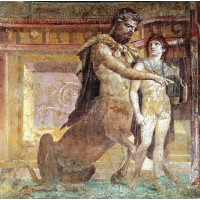



This content is copyrighted by its original authors. In case of any infringement, please contact us for removal.
Comments
Write a comment